Mold Remediation in Rockwall, TX
Mold grows where water stayed too long: behind drywall after a slow leak, under flooring after a backup, in an attic under a dripping AC pan. Removing it properly means finding and fixing the moisture, containing the area, and removing what’s contaminated. Call (972) 630-3491 to be connected with Texas-licensed mold professionals serving Rockwall.
Please stay on the line while your call connects.
Signs you have a mold problem
- A musty smell that comes back after cleaning, especially in a closet, bathroom or near an exterior wall
- Spotting or discoloration on drywall, baseboards or ceilings, often near a past leak
- Peeling paint, warped baseboards or soft drywall
- Mold on the back of carpet pad or under vinyl after a water loss
- A ceiling stain under an attic AC unit or water heater
Where there’s mold, there was water. If the source is still leaking, cleaning the mold won’t last.
Mold remediation rules in Texas
Texas regulates mold work through the Texas Department of Licensing and Regulation (TDLR). For mold covering 25 contiguous square feet or more, a licensed mold assessor evaluates the area and writes a remediation protocol, and a licensed mold remediation contractor does the work to that protocol. The same company can’t serve as both assessor and remediator on the same project.
After the work passes clearance, the remediator issues a Certificate of Mold Damage Remediation. Keep it: Texas sellers have to disclose these certificates when selling a home, and insurers may ask for it. Smaller areas under 25 square feet don’t require a license, but the same methods apply.
How mold remediation works
- Fix the moisture. The leak, backup or condensation that fed the mold is stopped first.
- Assess. For larger areas, a licensed assessor maps the affected area and writes the protocol.
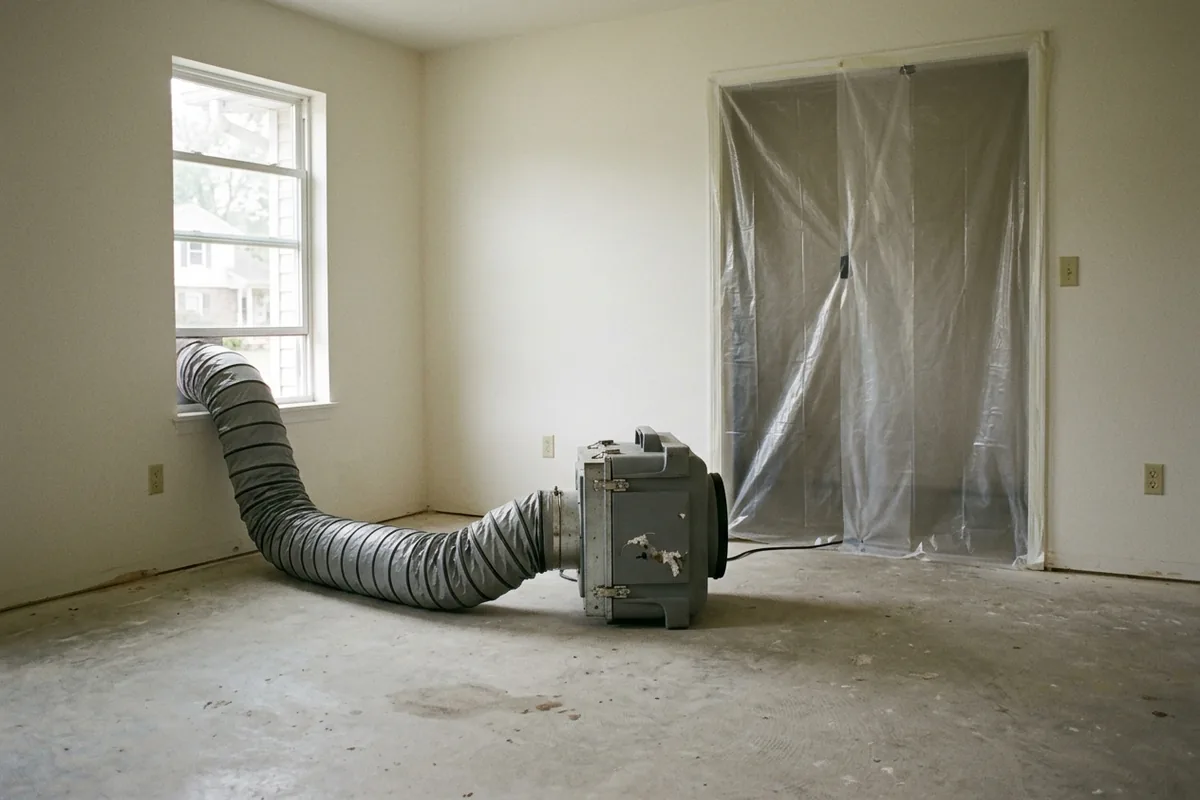
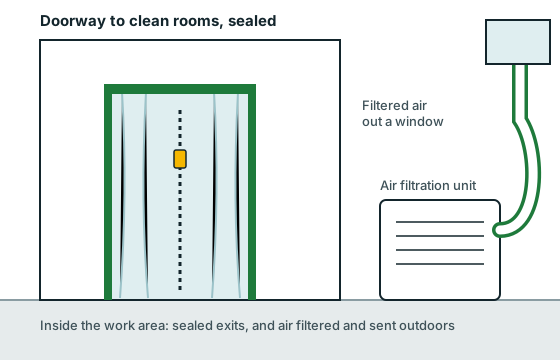
- Contain. The work area is sealed with plastic sheeting under negative air pressure so spores don’t spread to the rest of the house.
- Filter the air. HEPA air scrubbers run throughout the job.
- Remove and clean. Moldy drywall, insulation and carpet pad are removed and bagged; framing and other materials that stay are cleaned and HEPA-vacuumed.
- Dry and clear. The area is dried, and for licensed jobs a clearance assessment confirms the work met the protocol.
Mold after a sewage backup or water loss
Most mold jobs in Rockwall homes start with a water event that wasn’t fully dried: a toilet overflow that soaked the subfloor, a sewage backup cleaned up with a mop, a slow supply line leak inside a wall. That’s why the best mold prevention is fast, verified drying. See water damage restoration and sewage damage restoration.
North Texas humidity, attic AC units and slab homes with carpet over concrete all give mold chances to start when water isn’t dried completely.
What not to do
- Don’t spray bleach on drywall and paint over it. Bleach doesn’t reach mold rooted in porous material.
- Don’t run the HVAC or fans across a moldy area; it spreads spores.
- Don’t scrape or sand dry mold without protection.
- Don’t close up a wall until the framing reads dry.
Mold remediation near you
Mold calls are taken across ZIP codes 75087 and 75032: Rockwall, Heath, the parts of Fate inside those ZIP codes, and McLendon-Chisholm. Read more in mold after water damage: how fast it grows.
Mold remediation questions
Do I need a licensed company for mold removal in Texas?
For mold covering 25 contiguous square feet or more, yes. Texas requires a licensed mold assessor to write the protocol and a licensed mold remediation contractor to do the work, and they must be different companies on the same project.
Can I clean a small patch of mold myself?
Small areas under 25 square feet on hard surfaces can usually be cleaned with gloves, eye protection and an N95 mask. If it keeps coming back, the moisture source hasn’t been fixed, and if it’s on drywall or carpet, the material usually has to come out.
Is the mold in my house dangerous?
Mold can trigger allergy and asthma symptoms and irritate eyes, nose and throat, and people with weakened immune systems are at greater risk. Any type of mold growing indoors should be removed and its moisture source fixed.
Does insurance cover mold remediation?
It depends on the policy. Coverage, when there is any, usually ties to a covered water event such as a sudden pipe burst and may be capped. Mold from long-term leaks or humidity is commonly excluded. Ask your agent.
What is a Certificate of Mold Damage Remediation?
A document the licensed remediator issues after a job passes clearance. It shows the mold was remediated under a licensed assessor’s protocol. Keep it with your home records; sellers in Texas must disclose these certificates.
Sewage in your home or business?
Keep people and pets away from the affected area and avoid touching anything wet. Call Rockwall Sewage Solutions at (972) 630-3491 to talk through next steps.
Please stay on the line while your call connects.