Water Damage Restoration in Rockwall, TX
A burst pipe, a failed water heater or a leak under the slab can soak floors and walls in minutes. What you do in the first day decides whether it’s a drying job or a mold job. Rockwall Sewage Solutions handles water extraction, drying and repairs in homes and businesses across Rockwall, Heath, Fate and McLendon-Chisholm.
Please stay on the line while your call connects.
If water is coming in right now
- Shut off the water at the main valve. In most Rockwall homes it’s in a box near the street or where the line enters the house; the city meter box is a backup.
- Turn off power to any wet area at the breaker if you can reach the panel without standing in water.
- Move furniture, rugs and electronics out of the water, and put foil or blocks under furniture legs that can’t move.
- Photograph everything before it’s moved or thrown out.
- If the water came from a toilet, a drain or the sewer line, treat it as sewage and see sewage backup cleanup.
Common causes of water damage in Rockwall homes
Burst and frozen pipes
North Texas homes aren’t built for long hard freezes, and pipes in exterior walls, attics and garages are the first to split, as many found out in the February 2021 winter storm. The leak often shows up when the pipe thaws. See what to do when a pipe bursts.
Water heaters and appliance lines
Tank water heaters, washing machine hoses, ice maker lines and dishwasher connections fail without warning. Water heaters in attics or upstairs closets can send water through ceilings below.
AC condensate lines
Air conditioners run most of the year here, and a clogged condensate drain or a rusted drain pan in the attic leaks onto the ceiling drywall, often slowly enough that it’s noticed only as a stain.
Slab leaks
Rockwall’s expansive clay soil moves enough to stress water lines running under the slab. Warm spots on the floor, a meter that spins with every tap off, or wet flooring with no visible source point to a slab leak, which needs a licensed plumber to locate and repair.
Storms and roof leaks
Spring storms bring hail and wind-driven rain that can get through damaged roofing, windows and doors.
Clean water, gray water and black water
Restoration work starts by classifying the water, because it decides what can be dried in place and what has to go.
- Category 1 (clean): a supply line or burst pipe. Most materials can be dried if the work starts quickly.
- Category 2 (gray): washing machine or dishwasher discharge. Some porous materials may need to be removed.
- Category 3 (black): sewage, or clean water that has sat long enough to grow bacteria. Soaked porous materials are removed. See Category 3 water explained.
Clean water doesn’t stay clean. After a day or two in carpet and drywall it can turn into Category 2 or 3, which is one reason to start drying fast.
How water damage restoration works
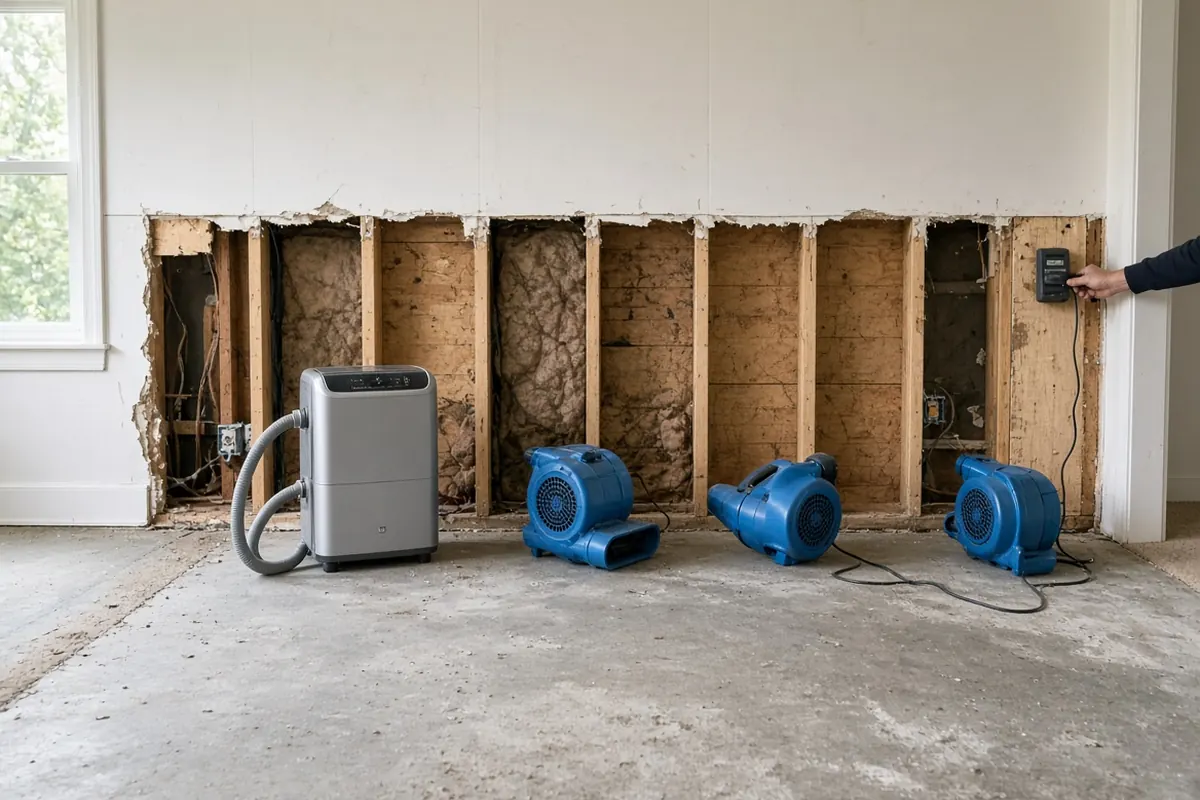
- Stop the source and inspect. Confirm the water is off and use moisture meters and thermal imaging to find how far it spread, including inside walls and under flooring.
- Extract. Remove standing water from floors and carpet.
- Remove what can’t be dried. Pad, swollen baseboards and drywall that wicked water are cut out; wet insulation comes out of the wall.
- Dry. Air movers and dehumidifiers run for several days, with moisture readings taken daily.
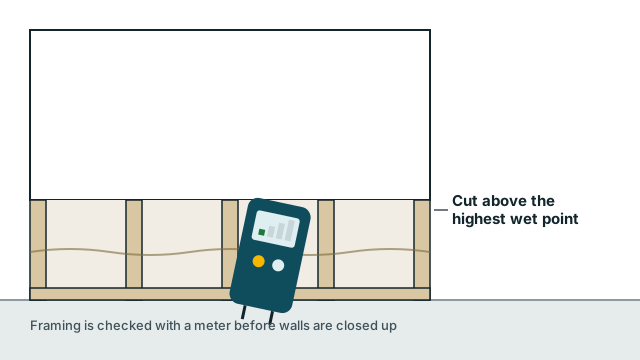
- Verify. Framing and subfloor are checked against dry readings before anything is closed up.
- Repair. Drywall, paint, baseboards and flooring are put back.
Insurance and water damage
Most Texas homeowners policies treat sudden, accidental water damage, such as a burst pipe or a water heater that fails, differently from damage that built up over time from a slow leak. Sewer and drain backups are often excluded unless the policy has a water backup endorsement. Call your agent early, photograph everything, and keep the moisture readings and the list of removed materials. More in sewer backup and insurance in Texas.
Water damage restoration near you
The service area is ZIP codes 75087 and 75032: Rockwall, from downtown and The Shores to Chandlers Landing, plus Heath, the parts of Fate inside those ZIP codes, and McLendon-Chisholm. If mold has already started, see mold remediation.
Water damage questions
How long does it take to dry out water damage?
Most rooms take several days of drying with air movers and dehumidifiers, longer for hardwood, cabinets or a slab. The equipment comes out when moisture readings match dry materials, not on a fixed schedule.
Can wet carpet be saved?
Carpet soaked with clean water can often be dried if the work starts within a day or two, though the pad is usually replaced. Carpet soaked with gray or black water, or left wet too long, is removed.
Do I need to cut out drywall after a leak?
Not always. Drywall that got wet briefly from clean water can sometimes be dried in place. Drywall that wicked water up from the floor, holds wet insulation behind it, or was soaked by contaminated water is usually cut out above the wet line.
How soon can mold start after water damage?
Mold can start growing on wet materials within a couple of days in warm conditions. Fast extraction and drying is the best prevention. See mold remediation.
Is it a slab leak?
Warm spots on the floor, the sound of running water with everything off, a water meter that keeps moving, or wet flooring with no visible source are common signs. A licensed plumber can confirm and repair it; the water damage is dried and repaired afterward.
Sewage in your home or business?
Keep people and pets away from the affected area and avoid touching anything wet. Call Rockwall Sewage Solutions at (972) 630-3491 to talk through next steps.
Please stay on the line while your call connects.