Toilet Overflow and Bathroom Sewage Cleanup
A toilet overflow can be a quick mop-up or a contaminated mess that has soaked through the subfloor into the room below. The difference is what was in the water and how long it sat. Bathroom overflow cleanup is available for Rockwall homes and businesses, including the ceilings and walls under upstairs bathrooms, in Rockwall, Heath and Fate. If it’s overflowing right now, start with what to do right now.
Please stay on the line while your call connects.
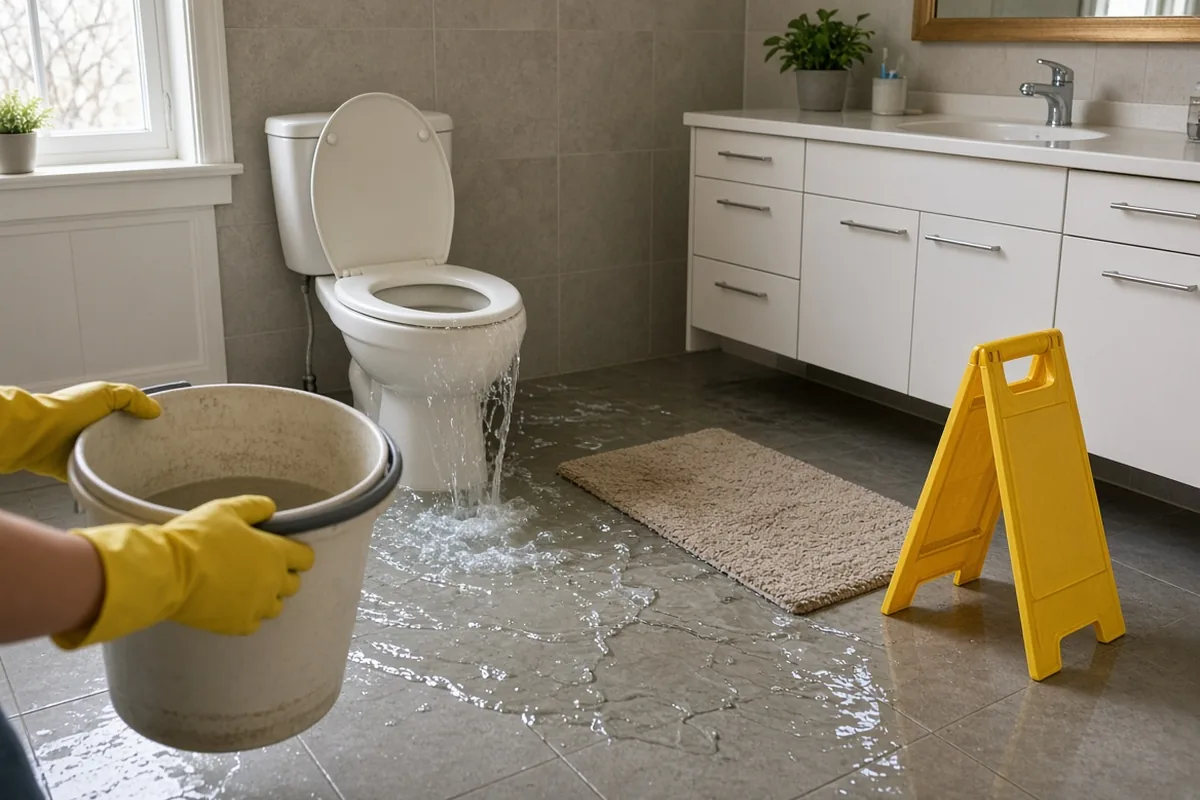
Clean overflow or contaminated overflow?
Water from a broken supply line or the tank is clean when it leaves the pipe. Water from the bowl, especially with waste in it, is Category 3 from the start. Even clean water can become contaminated as it soaks into flooring and sits, which is why an overflow left for a day is treated more cautiously than one caught right away. Category 3 water explained.
When water reaches the ceiling below
In two-story homes, an upstairs overflow travels through the subfloor and between joists before it shows up as a stain, a bulge or a drip on the ceiling below. By then the insulation and drywall above that ceiling are often wet too. Ceiling drywall soaked with bowl water is cut out, the cavity is cleaned and dried, and the ceiling is replaced once it’s dry.
Damage to look for
Flooring and subfloor
Water runs under tile edges, vinyl seams and around the toilet flange. A soft or spongy floor near the toilet usually means the subfloor is wet.
Vanities and baseboards
Particleboard vanity bases and MDF baseboards swell when they soak up water and usually can’t be saved after contaminated water.
Walls
Water wicks up drywall from the floor. Walls are checked with a moisture meter, not by eye.
Common causes
- A clog in the toilet or the drain line beyond it
- A failed wax ring, which can leak quietly under the toilet for a long time
- A main line backup, which pushes water up through the toilet; in that case see sewage backup cleanup
- A broken fill valve or supply line, which overflows clean water from the tank
What the cleanup involves
- Stop the water. Confirm the source and that the supply is off.
- Remove standing water. Extract water and contaminated debris.
- Check under the toilet. Pull the toilet if needed to check the flange and subfloor.
- Remove soaked materials. Take out flooring, baseboards and vanity parts, and open the ceiling below if it’s wet.
- Clean, disinfect and dry. Check moisture before repairs.
Repairs are covered under restoration after sewage.
Before help arrives
- Turn off the water at the valve behind the toilet (turn clockwise).
- Don’t flush again.
- If water is coming through a ceiling, turn off the lights and fans on that circuit and keep people out from under it.
- Put towels down outside the bathroom door to stop it spreading, then wash your hands thoroughly.
Overflow service area
Toilet overflow cleanup covers ZIP codes 75087 and 75032: Rockwall, Heath, the parts of Fate inside these ZIP codes, and McLendon-Chisholm. In two-story homes, an upstairs bathroom often sits over a living area or kitchen, which is where the ceiling-below problem shows up.
Toilet overflow questions
Can I just mop it up?
If clean tank water spilled onto tile and you caught it right away, mopping and disinfecting may be enough. If bowl water reached carpet, wood or the room below, the hidden layers need to be checked and usually removed.
Why does my bathroom smell after an overflow?
Water that soaked under the flooring or into the subfloor keeps smelling until it’s removed. A failing wax ring can also let sewer gas in. See sewage odor removal.
Should a plumber look at the toilet?
Yes, if the overflow came from a clog you couldn’t clear, a leaking wax ring or repeated overflows.
Sewage in your home or business?
Keep people and pets away from the affected area and avoid touching anything wet. Call Rockwall Sewage Solutions at (972) 630-3491 to talk through next steps.
Please stay on the line while your call connects.