Sewage Cleanup Service in Rockwall, TX
Sewage in the house is a health problem first and a property problem second. Rockwall Sewage Solutions provides sewage and sewer cleanup for backups, toilet overflows and septic backups in homes and businesses across Rockwall, from downtown and The Shores to Chandlers Landing, plus Heath, Fate and McLendon-Chisholm.
Please stay on the line while your call connects.
Serving ZIP codes 75087 and 75032.
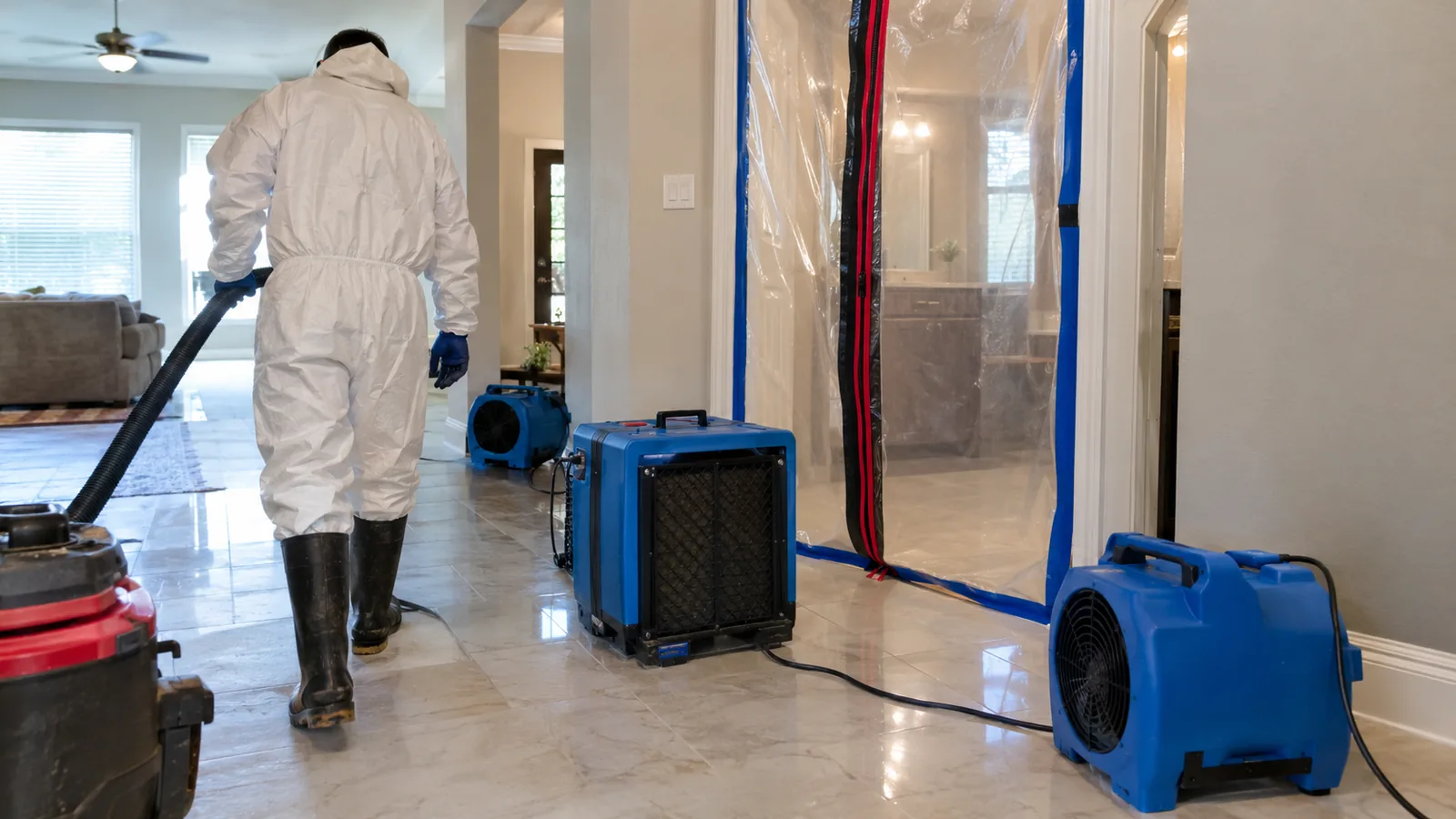
If sewage is coming in right now
- Stop using water: no flushing, showering, laundry or dishwasher.
- Keep children, pets and anyone with a weakened immune system away from the area.
- Turn off HVAC if the affected area has supply or return vents. Don’t run fans or a household vacuum over it.
- Take photos before anything is moved. Full first-hour checklist
What sewage cleanup involves
Sewage cleanup is the removal of wastewater that has escaped the plumbing, followed by cleaning, disinfecting and drying everything it touched. The water restoration industry treats sewage as Category 3, or “black water”: it carries bacteria, viruses and other organisms that can make people sick.
That classification is why the job looks different from drying out a clean-water leak. Wet carpet pad, drywall and insulation that sewage has soaked usually have to be cut out and discarded, not dried in place. Read more in the explanation of Category 3 water.
Signs you’re dealing with sewage
Inside the home
- Water coming up through a shower, tub or floor drain, usually the lowest drain in the house
- A toilet that overflows or bubbles when another fixture drains
- Several drains gurgling or running slowly at the same time
- A sewage smell that keeps coming back after cleaning
- Damp, stained or soft flooring near a bathroom, or a stained ceiling under an upstairs bath
Outside or under the home
- Wet, smelly patches in the yard along the sewer line
- Water standing around a cleanout cap
- On pier-and-beam homes, an odor coming from the crawl space vents
What causes sewage problems
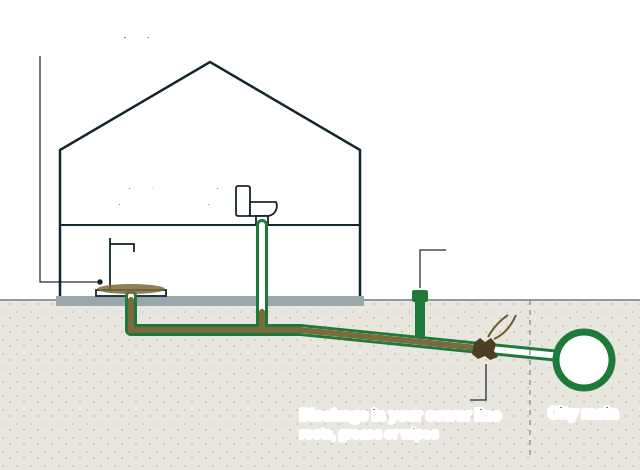
Most household backups start in the private sewer line between the house and the city main. Tree roots, grease, wipes and other items that shouldn’t be flushed narrow the pipe until wastewater has nowhere to go but back up the lowest drain. Older homes may have aging drain lines that crack, sag or separate.
Less often, the cause is a blockage in the public main, which is the city’s responsibility. The guide to who handles which part of the sewer line explains the difference. Homes on septic systems, common in parts of McLendon-Chisholm and unincorporated areas, can back up when a tank is full or an aerobic unit fails.
Sewer cleanup and sewage backup repair in Rockwall
A sewer backup has two problems: the line that stopped draining and the mess it left behind. Both have to be handled, in the right order, or the job isn’t finished.
- Clear the line. A licensed plumber clears the main sewer line through the outdoor cleanout, by snaking or hydro jetting, and often runs a camera to see why it clogged.
- Clean up the sewage. Extraction, removal of soaked materials, disinfection and drying, as described below. See sewage backup cleanup and repair.
- Repair the damage. Drywall, baseboards, flooring and cabinets are replaced once the structure is verified dry. See sewage damage restoration.
Homes on septic follow the same order, with a septic provider getting the system draining first; see septic backup cleanup. Clean-water leaks such as burst pipes are covered on water damage restoration, and mold that has already started on mold remediation. Call (972) 630-3491 to get started.
Sewage cleanup services
Every job follows the same core work. What changes is where the sewage came from and where it went. Compare all services.
Sewage backup cleanup
When the main line backs up into tubs, showers and floor drains.
Toilet overflow cleanup
Bathroom overflows, including upstairs toilets that leak into the ceiling below.
Septic backup cleanup
Indoor cleanup for homes on conventional or aerobic septic systems.
Water damage restoration
Burst pipes, water heater and appliance leaks, slab leaks and storm water: extraction and drying.
Mold remediation
Mold after a leak or sewage backup, handled by Texas-licensed mold professionals.
Crawl space sewage cleanup
Leaks under pier-and-beam homes, where the first sign is often a smell.
Sewage damage restoration
What gets removed, what can be cleaned, and getting rooms ready to rebuild.
Sewage odor removal
Finding the source of a sewage smell and treating it.
Commercial sewage cleanup
Restaurants, offices, shops and shared spaces in multifamily properties.
How the cleanup works
- Assess and make safe. Find where the sewage came from, how far it spread and whether electricity, gas or HVAC needs to be shut off in the area.
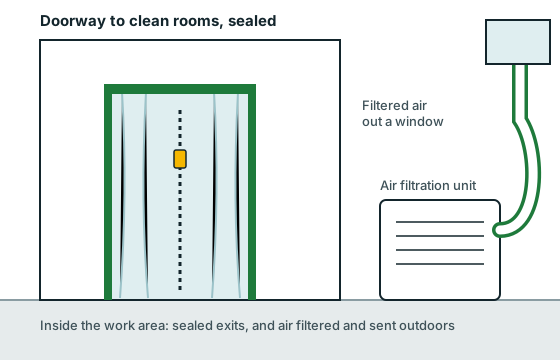
- Contain. Seal off the affected rooms with plastic sheeting and control airflow so contamination doesn’t spread to clean areas.
- Remove the sewage. Extract standing water and solids and bag contaminated debris for disposal.
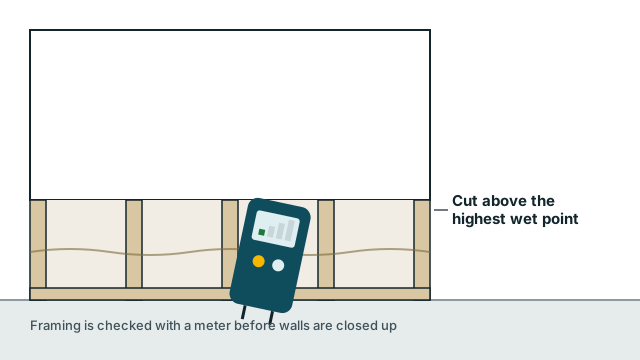
- Remove what can’t be saved. Cut out wet drywall above the waterline, pull carpet and pad, and remove soaked insulation.
- Clean and disinfect. Scrub remaining surfaces and apply an EPA-registered disinfectant suited to sewage.
- Dry and verify. Dry the structure with air movement and dehumidification, then check moisture levels before anything is closed up or rebuilt.
The plumbing fault that caused the backup needs a licensed plumber or septic provider. Cleanup contractors handle the damage the sewage caused.
Equipment and methods
Sewage jobs call for personal protective equipment (respirators, suits, gloves and boots), extractors and pumps for removing liquid, air movers and dehumidifiers for drying, HEPA air filtration, and moisture meters or thermal cameras to find water hidden inside walls and subfloors.
The last step matters most. Framing and subfloor are checked with a meter before anything is rebuilt, because closing a wall over damp wood traps moisture and invites mold. More on that in restoration after sewage.
Homes and businesses
In homes, most sewage losses are confined to bathrooms, laundry rooms and the floors around the lowest drains. In two-story houses, an upstairs overflow can reach the ceiling and walls below; see toilet overflow cleanup.
In businesses, the priority is often isolating the affected area so the rest of the building can stay open. See commercial sewage cleanup for restaurants, offices and shared buildings.
Areas served in Rockwall
The service area is ZIP codes 75087 and 75032, and nothing farther out.
Northern and central Rockwall 75087
Downtown Rockwall around the square, The Shores, Shores North and Northshore.
Southern Rockwall 75032
Chandlers Landing, High Point Lake Estates and the neighborhoods around T L Townsend Dr.
Throughout the city
Stone Creek, Breezy Hill, Lakeside Village, Lakeview Summit, Turtle Cove, Hickory Ridge, Caruth Lakes, Fontanna Ranch, Foxchase, Highland Hills and Rockwall Lake Estates.
Outside the city of Rockwall, the service area also covers Heath, the parts of Fate inside these ZIP codes, and McLendon-Chisholm. See all service areas.
Sewage cleanup questions
Can I clean up a small sewage backup myself?
A small spill on tile or vinyl that you catch right away can sometimes be cleaned with gloves, eye protection and a disinfectant. Once sewage has soaked into carpet, drywall or wood, or covers more than a small area, professional cleanup is the safer choice because those materials usually need to be removed.
Is sewage backup covered by homeowners insurance?
It depends on your policy. Many policies exclude sewer backup unless you added a water backup endorsement. Read the guide to sewer backup insurance in Texas and call your agent.
How long does sewage cleanup take?
It depends on how far the sewage spread and what had to be removed. Drying alone usually takes a few days, and repairs come after that. You’ll get a realistic timeline once the damage has been seen.
Is it safe to stay in the house?
If the sewage is limited to one area that can be closed off and you have a working bathroom elsewhere, many families stay. If it affects living areas, the only bathroom, or anyone vulnerable, it is safer to stay elsewhere until cleanup is done.
More answers on the FAQ page.
Sewage in your home or business?
Keep people and pets away from the affected area and avoid touching anything wet. Call Rockwall Sewage Solutions at (972) 630-3491 to talk through next steps.
Please stay on the line while your call connects.